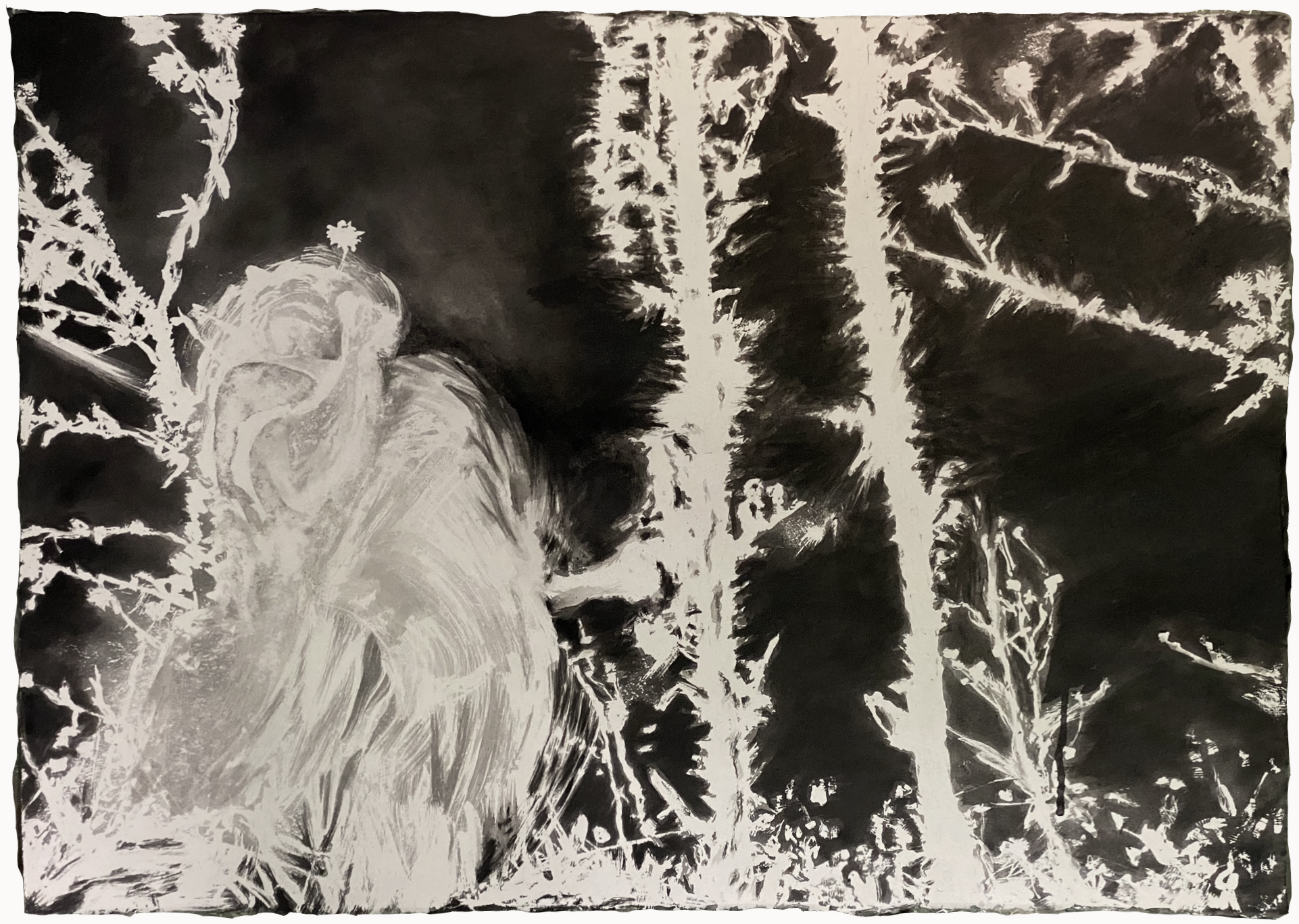
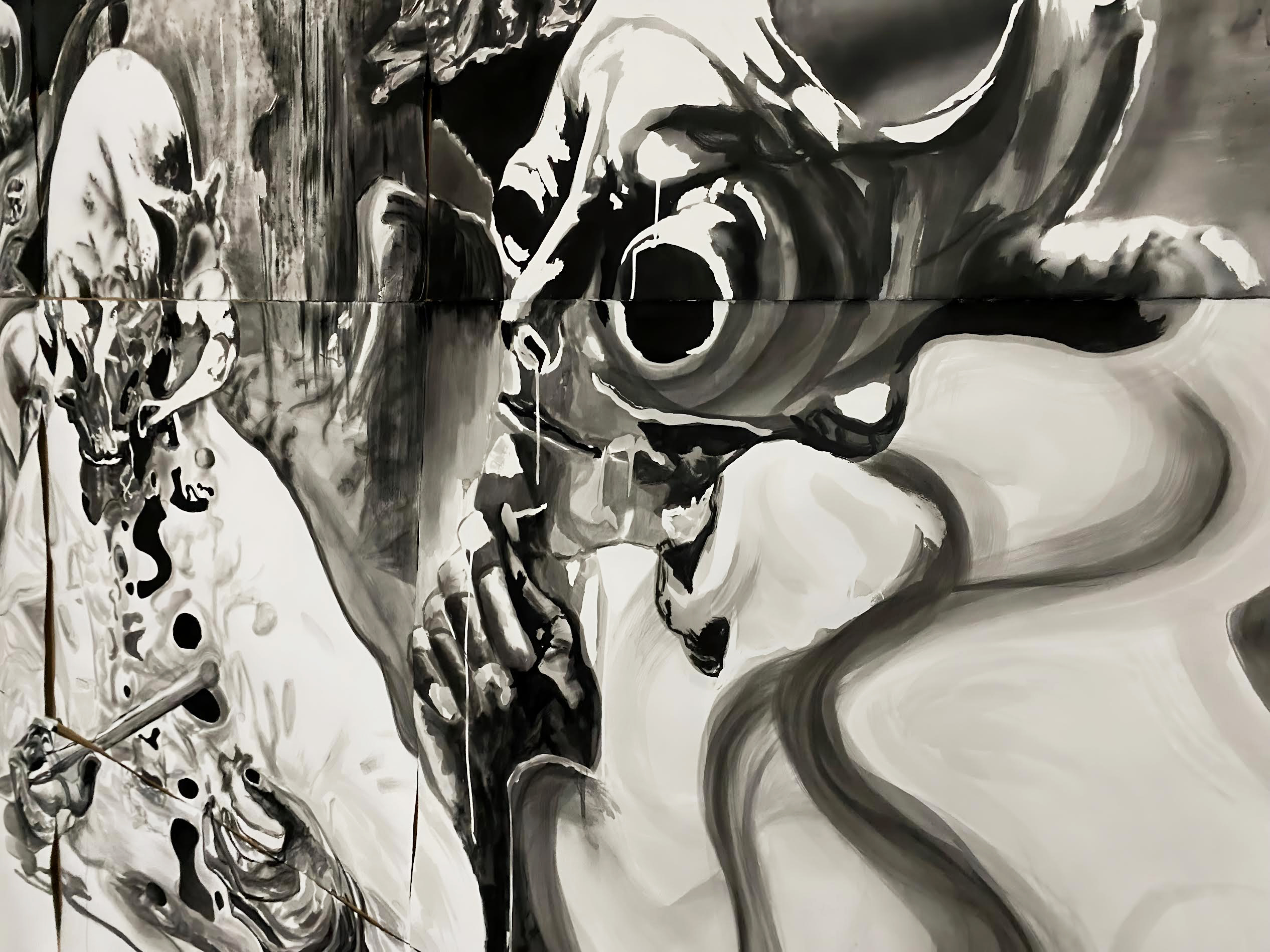
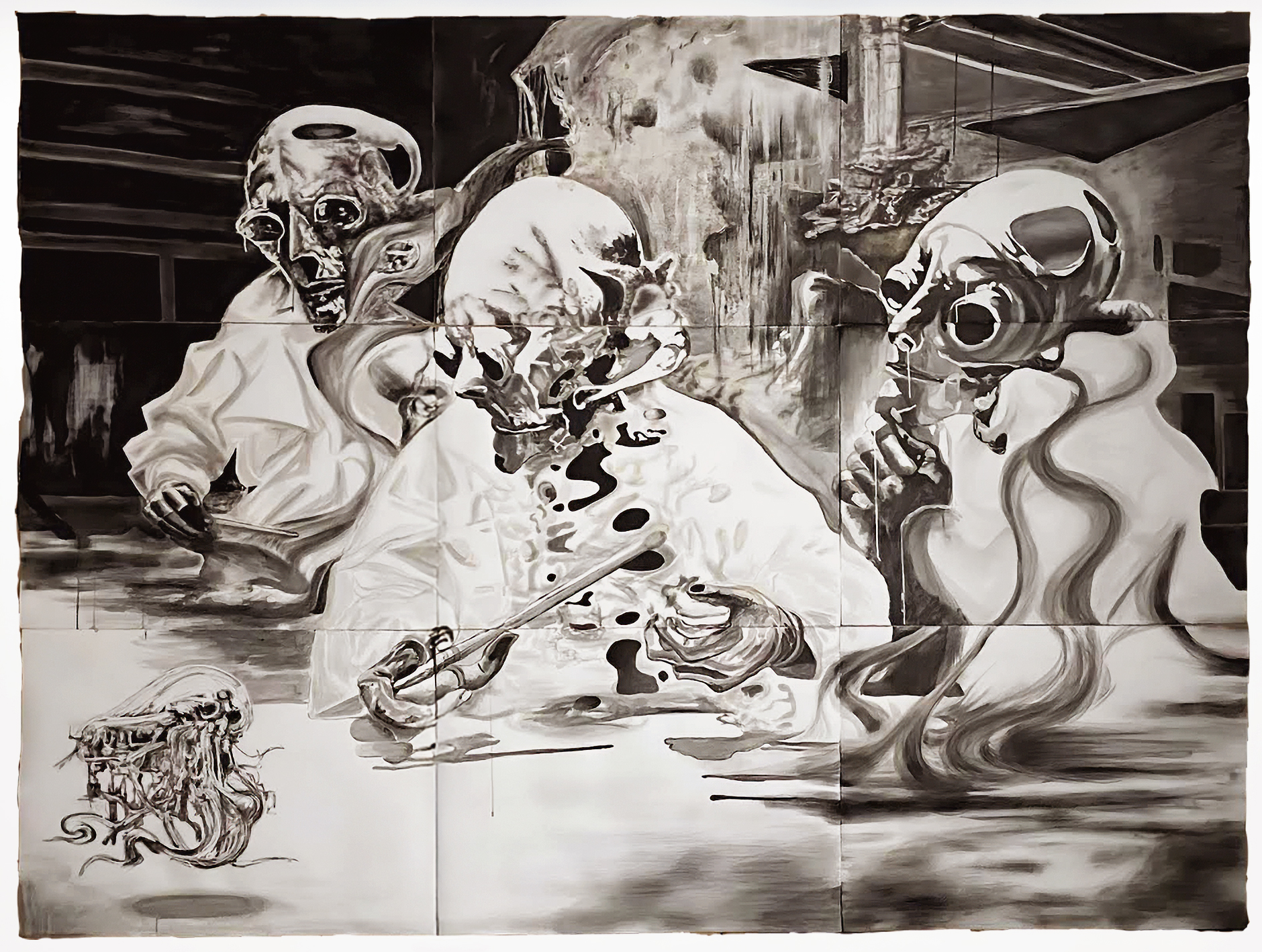
Memory Daydream
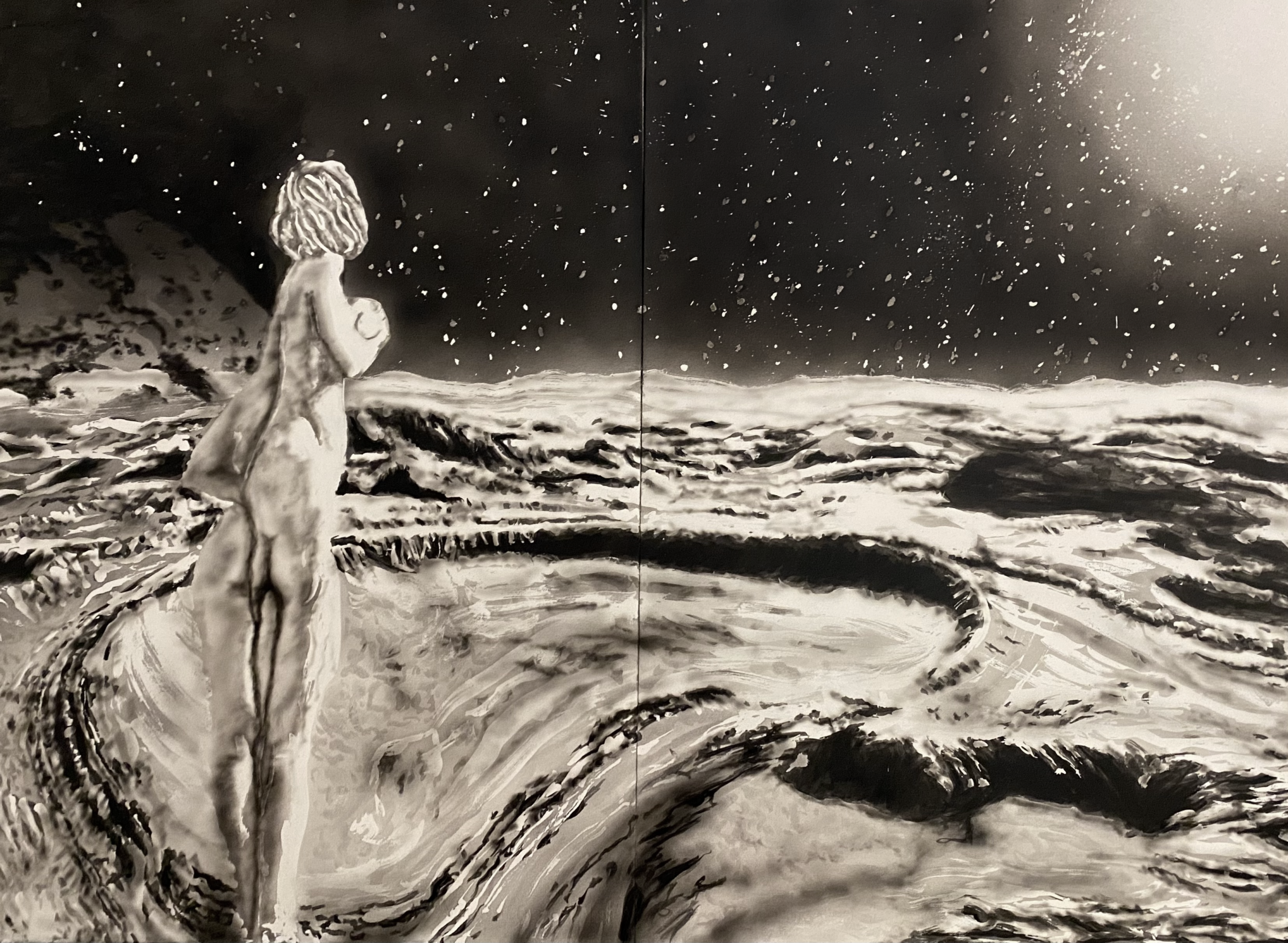
Hermaphrodite on Mars
In these impossibly conflicted times, our inability to think beyond the limits of our own cognition stands out. It is difficult to imagine another existence.
If something lies beyond what we can conceive, how can we begin to imagine it? This paradox opens up to an impossible space, but it is also an opportunity. What would it mean to imagine something, that by definition cannot be imagined? And if our longing for Space (and for the human exploitation of its resources) were to become reality, what would it feel like to inhabit such a place?
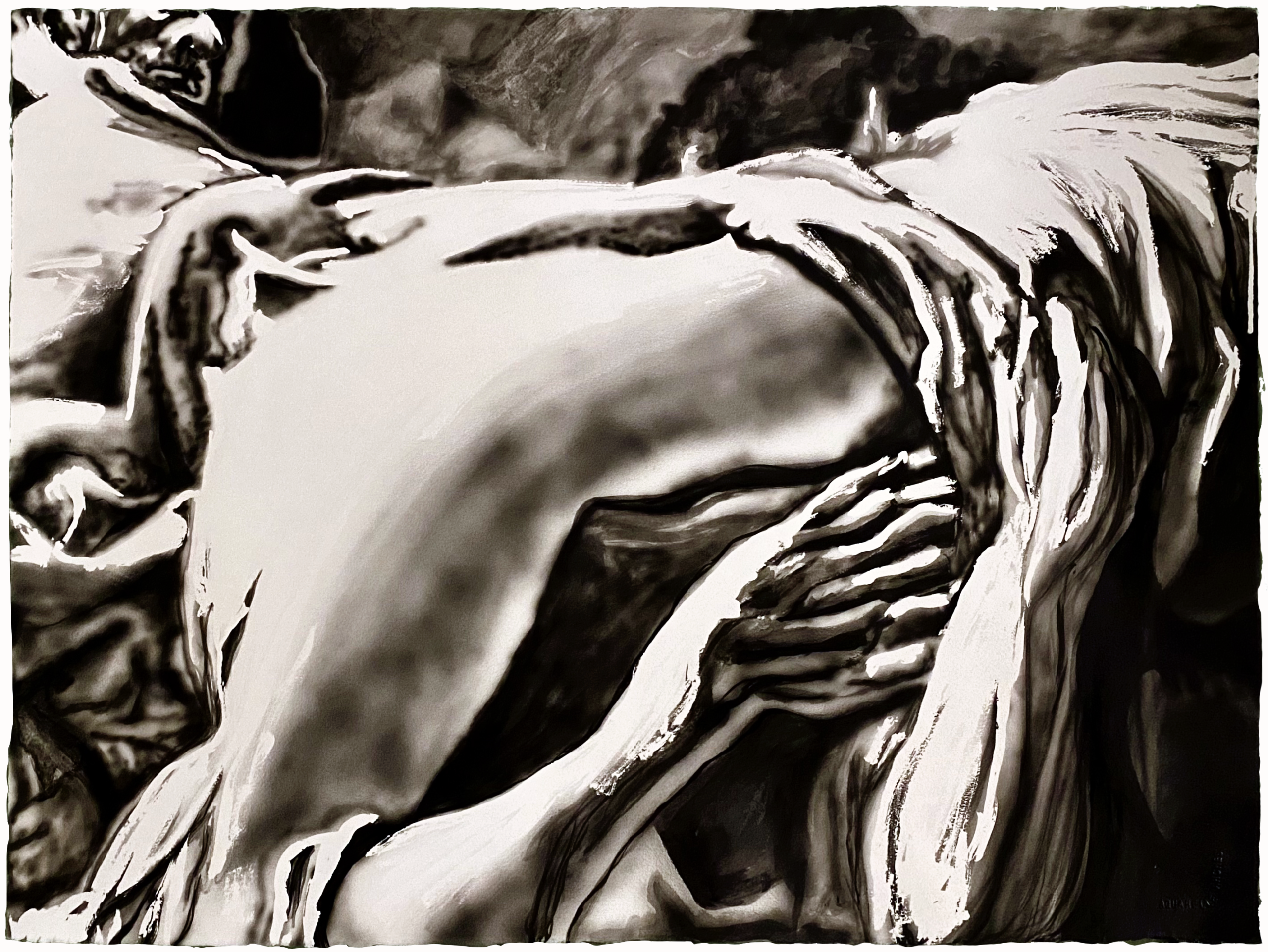
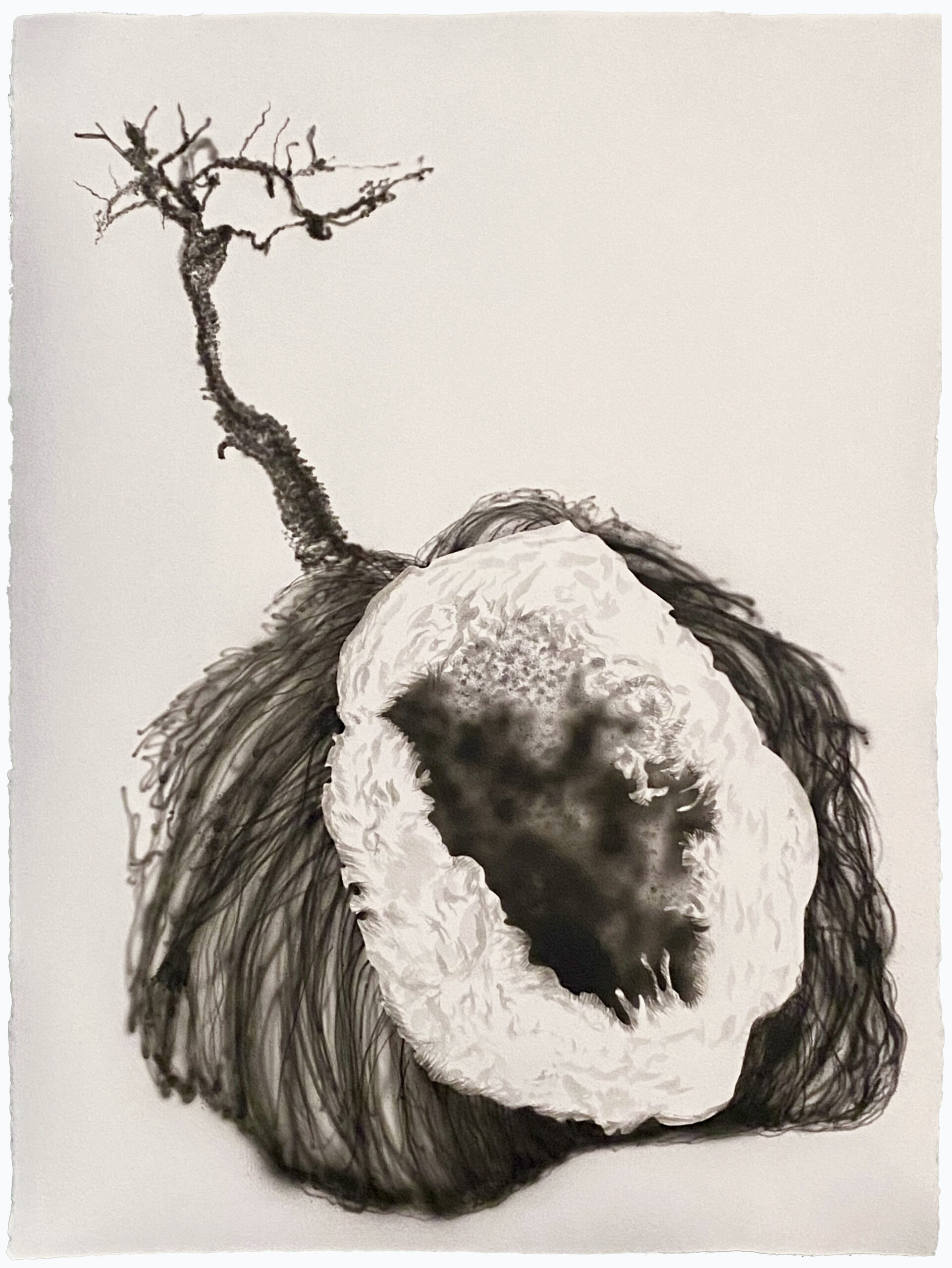
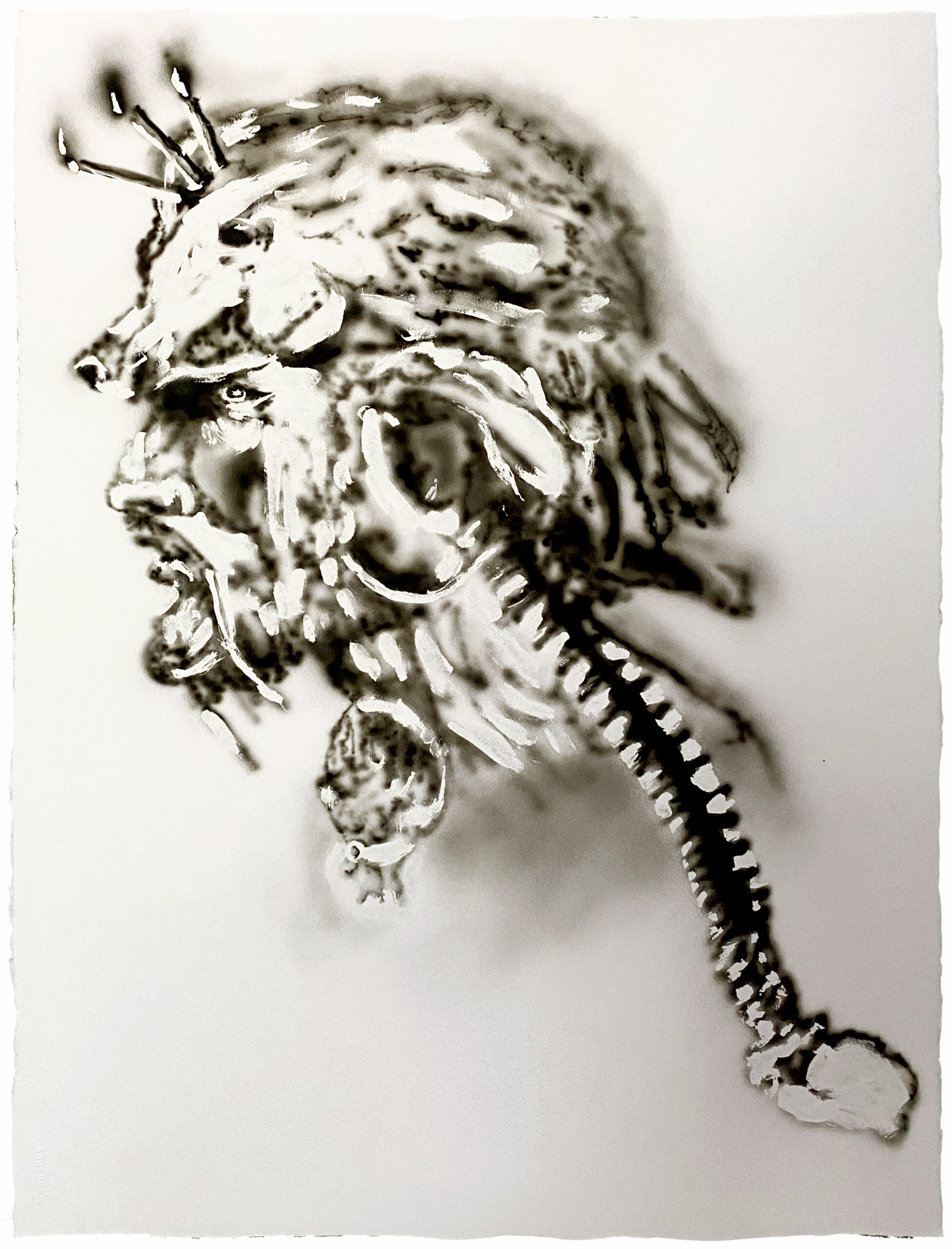
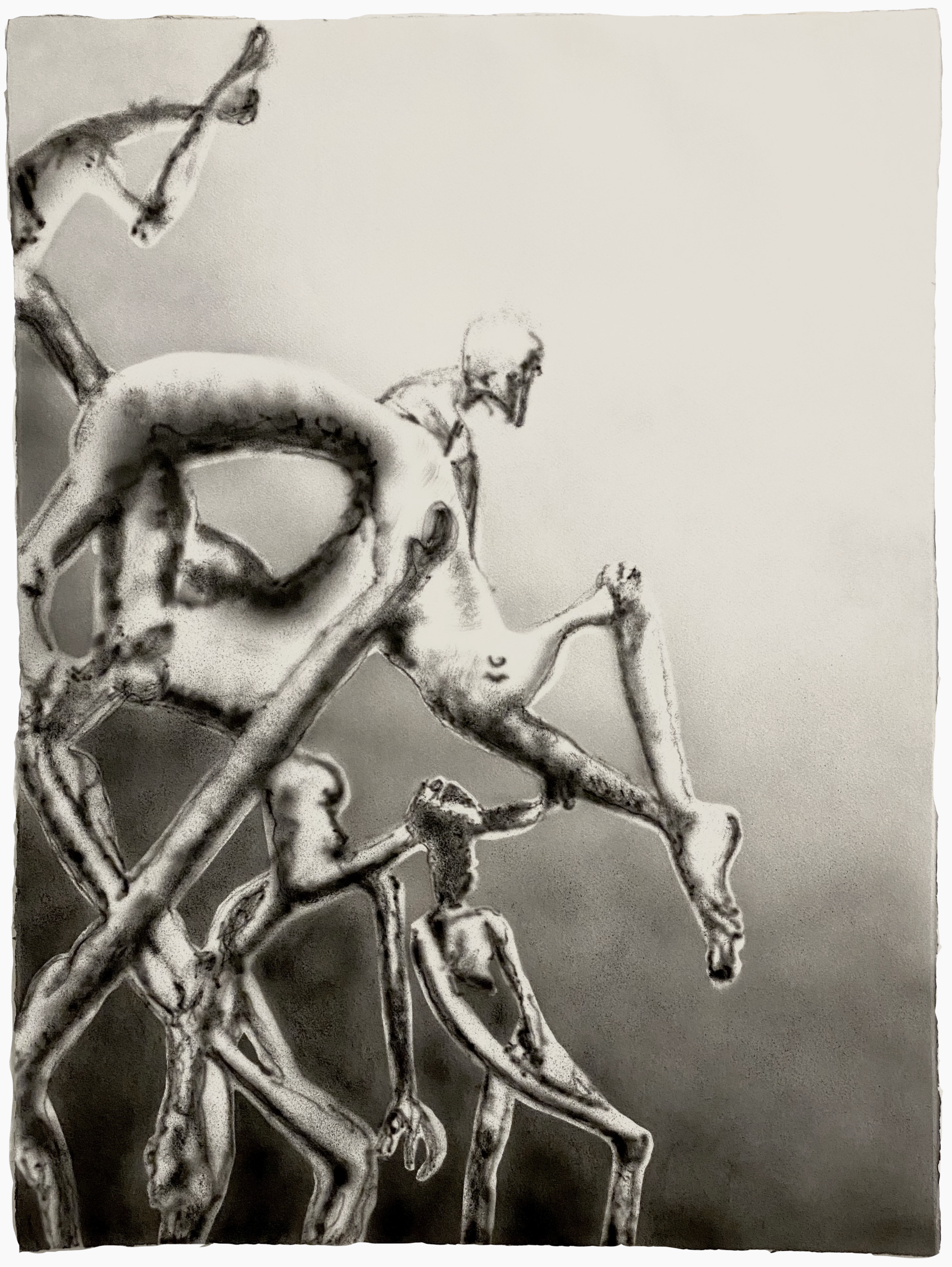
The diptych Hermaphrodite on Mars emerged from my desire to envision a future, which does not simply extend the present. Mars became a speculative site from which to distance myself from Earth and reconsider the reality I know, particularly the conflicts that shape my existence. This distance is not an attempt to escape reality, but a space in which to imagine possibilities beyond the binaries, through which conflict is understood. The place that emerges is not utopian; whatever transformations have taken place there, may have already left us behind.
I thought of Lot’s wife and her fatal curiosity. Perhaps we are all, in some way, like her. My desire was to take this tension, and redirect it toward a way of thinking that exceeds the limits of my own understanding. The body became a being of the future, one that may no longer need the gendered definitions that once seemed necessary. Unlike Lot’s wife, who looks back and turns into a pillar of salt, this figure continues to look forward, choosing to leave something behind, without knowing what lies ahead.
Krautrock accompanied me throughout the making process. It is a music genre, and a journey in itself; a search for a place that does not yet exist. History is not erased, but in this series of paintings, it ceases to be the primary point of reference. Through this figure, a different possibility begins to take shape: what happens when we stop choosing between two familiar sides, and instead move toward a place for which we do not yet have a language?
. . .